Solar Panel Installation Newport
Cut your electricity bills with solar panels designed and installed for Newport homes and businesses.

Cut your electricity bills with solar panels designed and installed for Newport homes and businesses.

Solar panel installation in Newport gives you a way out of rising energy bills that you control yourself. Every unit your roof generates is a unit you no longer buy from a supplier, and with battery storage fitted alongside, that saving carries on into the evening when your household uses the most power.
RCJ Electrical is a Newport electrical contractor based on Libeneth Road, trading since 2012 and MCS certified for solar PV. We design and fit solar panels, solar battery storage and complete solar PV systems for homeowners, landlords, farms and commercial properties across the Newport area and the rest of South Wales. Every installation is carried out by qualified electricians from our own installation teams, so the same people handle the panels, the inverter and the final connection into your consumer unit.
No two roofs in Newport are the same. A Victorian terrace in Stow Park, a 1970s semi in Bettws and a farmhouse out towards Langstone each need a different solar system, so we size yours around your roof, your property layout and the energy you use. You get the expected generation, savings and payback in writing before anything is ordered.
Read what homeowners and businesses say about working with our solar panel installers in Newport.
Energy bills take a bigger share of household and business budgets than they did a few years ago, and there is little sign of prices settling. Solar panels give you more control. You generate green electricity on your own roof, use it as it is produced, and draw less from the grid. Over the 25-30 year life of the panels, those long term savings add up to far more than the cost of installing solar panels in the first place.
Newport is already well on the way with solar energy. Newport City Council has fitted panels to the National Velodrome, the Kingsway car park and around 26 schools, with roughly 4.2MWp installed across its estate as part of its aim to become a carbon neutral organisation by 2030. A household doing the same on a smaller scale cuts its carbon footprint and its reliance on fossil fuels, and any excess energy you do not use earns Smart Export Guarantee payments from your supplier.
Businesses often see the biggest return, because offices, workshops and warehouses use most of their power during daylight hours, which is exactly when solar PV produces it. We fit commercial solar panel installation in Newport for commercial properties and industrial premises, designed around operating hours and roof space.
Planning ahead pays off too. If an electric car is on the horizon, we can size your solar system now so an EV charger runs on your own power later.
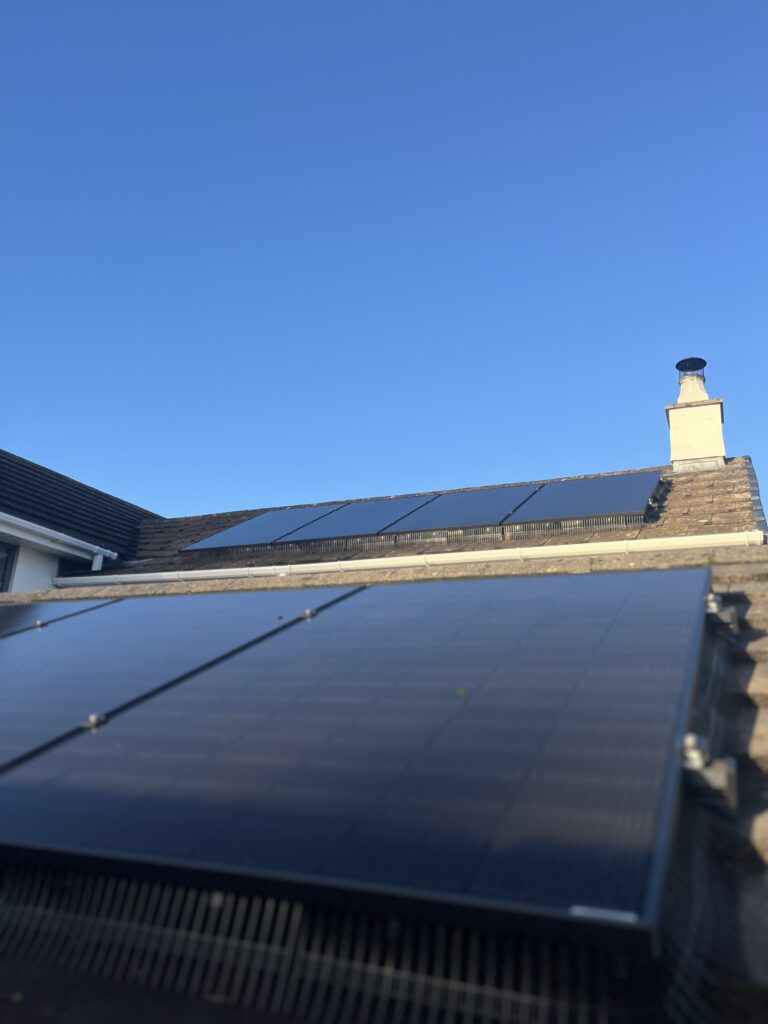
We keep every solar panel installation in Newport simple, with one point of contact from the first call through to aftercare.
Step 1: Free Site Visit and Quote One of our electricians visits your property for a free survey. We check the roof structure, which way it faces, how much usable space there is, any shading from chimneys, trees or neighbouring buildings, and the condition of your existing electrics. You then get a written quote showing expected annual generation, projected savings and your payback period, with straightforward advice.
Step 2: System Design and Sign-Off We confirm the panel layout, inverter position and where any solar battery will sit, and agree it with you before anything is booked. We check whether your property needs planning permission and handle the DNO paperwork. Smaller systems are notified to the network operator after installation, while larger systems need DNO approval before work starts, and we build that time into your plan.
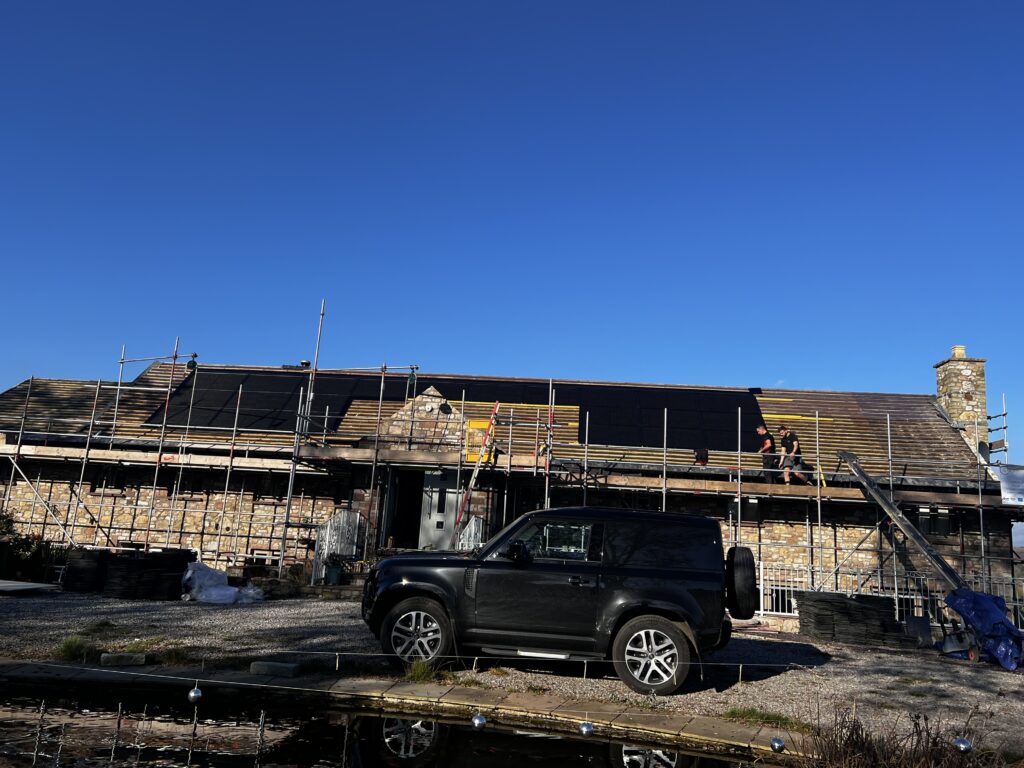
Step 3: Solar Panel Installation Our own team handles the scaffolding, mounting, wiring and inverter setup. Most domestic solar PV installation in Newport is completed within a week. Larger commercial, industrial or agricultural projects take longer, and you get a clear timeframe before we start.
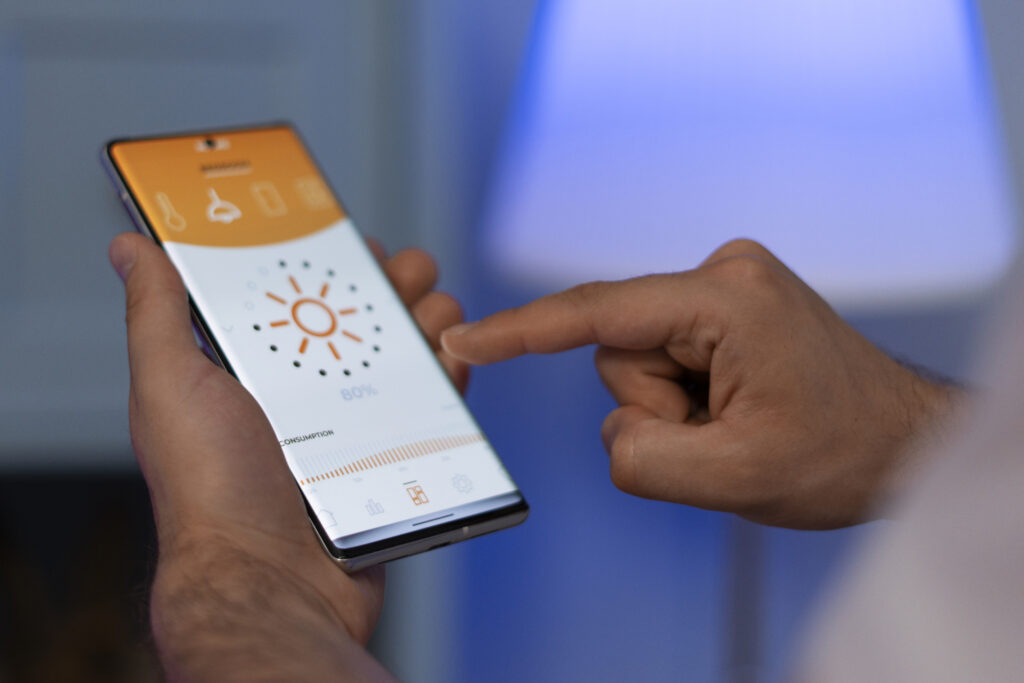
Step 4: Commissioning and Aftercare We test and certify your system to building regulations and MCS standards, complete the DNO registration, issue your MCS certificate, submit your Smart Export Guarantee application and set up the monitoring app so you can track generation and usage from your phone.
Without a battery, most households use around 30-50% of the electricity their solar panels generate. The rest goes to the grid during the day, often while nobody is home, and you buy power back in the evening at a higher price. Solar battery storage changes that. The battery stores excess energy from the afternoon and releases it when demand peaks, lifting the share of your own generation that you use to over 80%.
A battery system also gives you more energy independence. You can charge it from the grid overnight on a cheaper tariff during winter, and with a backup-enabled setup, keep essential circuits running through a power cut.
Battery storage works best when it is designed alongside the panels, so it is worth raising at the survey. If you already have panels, we can usually add battery storage to your existing solar PV system. Read more about our solar PV and battery storage systems or call 01633 270 285 to talk through battery storage solutions for your home.
Solar PV is a regulated industry. The installer you choose decides whether your system is signed off properly, whether it qualifies for export payments and whether its warranties hold. RCJ Electrical’s work is assessed by independent experts across the electrical and renewable energy sectors, and you can check every one of our credentials yourself before you commit.
A well-designed solar PV system paired with battery storage can cut electricity bills by 50-70%. Most households save between £550 and £1,550 a year, depending on system size and whether a battery is fitted, and that saving grows as energy prices rise.
Solar panels typically add 4-7% to a property’s value. Buyers now look at running costs and EPC ratings alongside the asking price, and a home that generates its own power is easier to sell.
A typical 10 panel system offsets around one tonne of CO2 a year. That is renewable energy replacing power from fossil fuels every day the sun is up, for decades after the panels go on.
Newport’s housing is about as varied as anywhere in South Wales, and it shapes every solar quote we put together. Older terraces and town houses fill the streets around Stow Hill, St Woolos and Clytha. Larger estates such as Bettws, Malpas and Alway were built through the post-war decades. Newer housing has spread around the city’s edges, and out towards Langstone, Marshfield and the Gwent Levels there are detached homes, farms and agricultural buildings with plenty of roof space.
Each brings something different. Terraced roofs are often split across two smaller faces, so we plan layouts that make the most of both. Older roofs get a structural check before any panels go near them. Farms and rural properties can suit larger arrays, including ground-mounted systems where roof space runs out, though these usually need planning consent.
Yes. RCJ Electrical is certified under the Microgeneration Certification Scheme, the UK standard for solar PV design, equipment and installation. Every solar system we fit in Newport is registered with MCS when it is commissioned.
It matters for your money as well as your safety. Only an MCS registered installation qualifies for Smart Export Guarantee payments, so if an installer cannot show you their MCS number, your exported electricity may earn nothing. You can check any installer, including us, on the MCS website.
Solar panels carry manufacturer product and performance warranties, typically 25-30 years. Inverters and batteries usually come with a 10-12 year warranty.
We fit high quality panels with strong manufacturer warranties, and the exact terms for your system are set out in your quote, so you know what is covered before you agree to anything.
Yes. We complete the DNO notification, MCS registration and your Smart Export Guarantee application as part of every installation.
The Smart Export Guarantee requires larger energy suppliers to pay you for surplus electricity you export to the grid. You can choose your export tariff from any supplier that offers one, so it is worth comparing rates once your MCS certificate arrives.
Start with MCS certification, because the Smart Export Guarantee depends on it. Then check who carries out the electrical work. A firm whose own qualified electricians fit and connect the system keeps the whole job under one roof.
Ask for an itemised quote showing the panels, inverter and any battery separately, and ask who handles the DNO paperwork, since some installers leave that to the customer. Finally, read their reviews and check their accreditations independently. Ours are listed above, and you can verify each one.
Most domestic solar panel installations cost between £5,000 and £10,000. The final price depends on the number of panels, your roof, scaffolding access and whether you add battery storage.
Residential solar panel installations and batteries currently qualify for 0% VAT on materials and installation. That rate is set to run until 31 March 2027, after which it is due to return to 5%. Your site visit gives you a fixed, written quote with no hidden costs.
Most households save between £550 and £1,550 a year on their electricity bills. Where you land in that range comes down to system size, how much power you use during the day and whether you fit a battery.
Adding solar battery storage pushes savings higher, because you use over 80% of your own generation instead of 30-50%. Smart Export Guarantee payments for any excess energy add to the total.
Most solar installations pay for themselves within 7-10 years. After that, your panels keep generating for the remaining 15-20 years of a 25-30 year lifespan, so most of the return comes once the system has paid back.
Your quote shows the payback period for your own property, worked out from your actual usage rather than a national average.
The main help for everyone is 0% VAT on residential solar panels and batteries, which runs until 31 March 2027. On top of that, the Welsh Government’s Warm Homes Nest scheme can fund energy improvements, including solar, for eligible households on a low income or means-tested benefits living in homes with a lower EPC rating.
Funding schemes change regularly, and local council support comes and goes. We check what you may be eligible for at the site visit.
As a guide, a 2-3 bed home usually needs 8-10 panels, a 3-4 bed home 10-13, and larger or higher-usage properties 14 or more.
Bedroom count is only a starting point. We size your system against your annual electricity use, your roof space and whether you plan to add a battery, an EV charger or a heat pump later.
Yes. Solar panels generate from daylight rather than direct sunshine, so they keep producing on overcast days, which Newport has plenty of. Output drops in winter because the days are shorter, but panels run more efficiently in cool temperatures, so bright winter days perform well.
Over a full year, a well-designed 4-5 kWp system in South Wales generates around 3,800-4,900 kWh. A battery helps smooth the gaps by storing power from brighter spells.
Solar panels typically last 25-30 years, and many keep working beyond that at slightly reduced output. Inverters usually need replacing once during the panels’ lifetime, which is why their 10-12 year warranty matters.
Looking after the system extends its life. See the maintenance answer below for what that involves.
It either charges your solar battery or is exported to the grid. Exported electricity earns Smart Export Guarantee payments from your chosen supplier, paid per kWh.
Without a battery, a typical household exports much of its daytime generation. If you are out at work most days, battery storage is usually worth more to you than the export payments.
Solar panels need very little, but regular checks keep them performing. We recommend at least two inspections a year, covering panel cleaning, inverter checks and inspecting cabling and fixtures for wear.
Cleaning helps where dirt, moss or bird droppings build up, especially on low-pitched roofs. We offer solar panel maintenance in Newport for systems we have fitted and for existing installations.
For most homes, yes. Without a battery you use around 30-50% of your solar generation. With one, that rises to over 80%, so you buy far less from the grid in the evenings.
A battery also lets you charge cheaply overnight on a time-of-use tariff during winter, when your panels produce less. We look at your usage at the survey and tell you honestly whether a battery suits you.
A standard solar system shuts down during a power cut to protect engineers working on the grid. A backup-enabled battery system can keep essential circuits running until power returns.
This is worth considering for rural properties and businesses that cannot afford downtime. Mention it at the survey so we design it in from the start.
Usually, yes. Most solar PV systems can take a battery retrofitted later, and since February 2024 a standalone battery added to an existing system also qualifies for 0% VAT.
Fitting both together does save money, though, because the electrical work and scaffolding are only paid for once.
Usually not. Welsh Government guidance says roof-mounted solar panels on a house are likely to be permitted development, provided they do not project more than 200mm from the roof surface and are sited to keep the visual impact to a minimum.
There are exceptions. Listed buildings need consent, flats do not have the same permitted development rights, and ground-mounted arrays are treated differently. Some Newport conservation areas have Article 4 Directions, which remove certain rights. We confirm the position for your property before installation.
Often, yes, but expect more checks. Newport has 15 conservation areas. In Wales, panels on the principal or side elevation walls of a home in a conservation area need consent where they are visible from the highway, and Caerleon, Stow Park and The Shrubbery have Article 4 Directions removing some permitted development rights.
Listed buildings need listed building consent. Rear-facing roofs and outbuildings tend to be viewed more favourably. We assess what is achievable first, and Newport City Council’s conservation officer can give guidance for your address.
East and west-facing roofs still produce good yields, spread across the morning and afternoon rather than peaking at midday. That spread often matches when households use power.
Paired with battery storage, the gap in annual savings is smaller than most people expect. We model your actual roof at the site visit and show you the figures.
A full rooftop system on a flat needs the freeholder’s agreement and usually planning permission, and renters need their landlord’s consent. Landlords who own the whole building can install solar for their tenants.
Since 27 August 2026, plug-in solar kits of up to 800W have been legal in Great Britain. They plug into a standard socket and sit on a balcony, wall or garden, so they can be a sensible first step if a rooftop installation is not possible.
Yes. We install solar panels on homes, commercial properties, industrial premises, farms and rural properties across Newport and South Wales.
Larger sites are designed around operating hours and energy demand, so the panels cover usage as it happens. Find out more about our commercial solar panel installation service.
Most domestic solar panel installations are completed within a week, from the scaffolding going up to the system being commissioned. Larger commercial and agricultural projects take longer, as do any that need DNO approval, structural work or planning consent.
You get an accurate timeframe at the site visit before any work is booked.
Very little. Most of the work happens on the roof. Inside, we need brief access to fit the inverter, run cabling and connect the system to your consumer unit, and your power is only off for a short time during that connection.
Businesses can usually keep trading throughout, and we plan any shutdown around your working hours.
Replace the roof first. Taking panels off and refitting them later costs money and means a second round of scaffolding.
If your roof needs work in the next few years, we will tell you at the survey. Doing both at once means you pay for scaffolding once and your new roof is protected under the panels for decades.
The panels stay with the property and become part of the sale. Pass the MCS certificate, warranty documents and monitoring details to the buyer, as these help them register for the Smart Export Guarantee and claim on any warranties.
Solar can also help the sale, since panels typically add 4-7% to a property’s value and improve the EPC rating.
Tell your home insurer, as solar panels add value to your property and should be covered by your policy. Most insurers simply note the change.
For a system you own outright, lenders rarely raise issues. Problems tend to come from rent-a-roof schemes, where a third party owns the panels. If you are unsure, contact your lender before installation.
Fill in the form and one of our qualified electricians will visit your property, assess your roof and your energy needs, and put together a solar design showing expected generation, projected savings and a no obligation quote. There is no charge for the visit and no pressure to go ahead.
Prefer to talk first? Call us on 01633 270 285 to book your free site visit.